How to Buy a Korean Wedding Dress (Hanbok): A Complete Guide for Brides
Need help finding cultural vendors for your wedding? Check out our curated vendor directory.
For many Korean American brides, wearing a hanbok is one of the most meaningful parts of the wedding day. Whether it's for a paebaek ceremony, a reception entrance, or a traditional Korean wedding, choosing the right hanbok involves more decisions than most people expect.
If you're just starting the search, here's what you need to know.
Start With Your Timeline
Hanbok (especially custom pieces) require more lead time than you might expect.
A good rule of thumb is to start looking 4–6 months before your wedding. If you're ordering from a boutique in Korea, factor in production time (often 4–8 weeks) plus international shipping and local alterations. Even ready-to-wear hanbok often need tailoring once they arrive.
If your timeline is tight, rental is a practical option that many boutiques offer.
Decide Which Type of Hanbok You Want
Not all hanbok are the same, and the style you choose often depends on the ceremony.
Ceremonial Hanbok (Hwarot)
The most formal option, traditionally worn by royalty and now common for brides at traditional Korean weddings. Heavily embroidered, layered, and distinctive, these are usually rented rather than purchased.
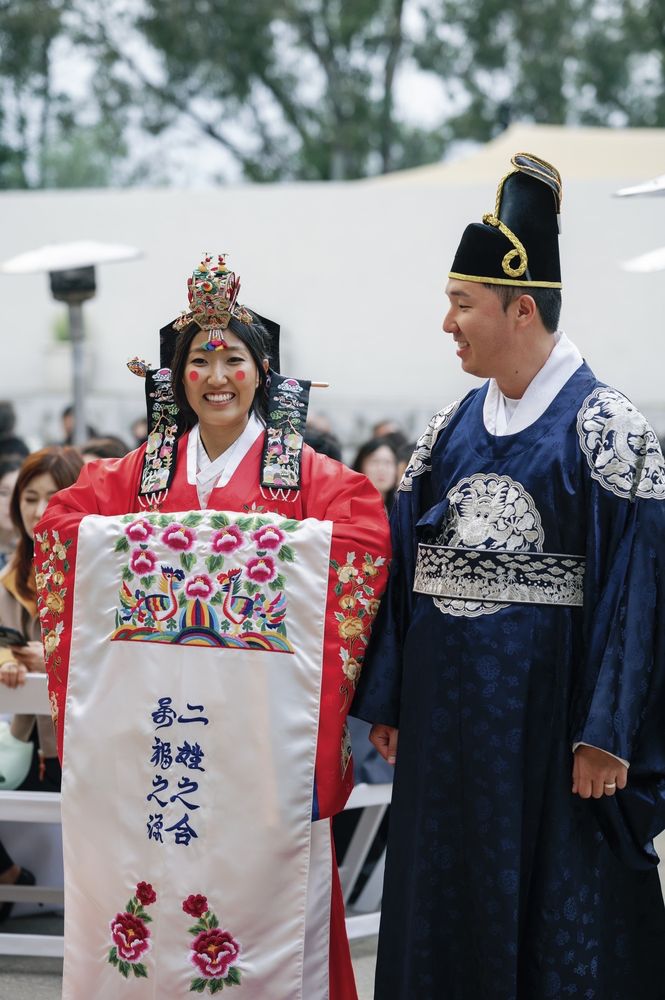
Traditional hanbok from Hanbok Bidanhyang.
Modern / Fusion Hanbok
Contemporary interpretations of the jeogori (jacket) and chima (skirt) that use lighter fabrics, softer colors, and cleaner silhouettes. Popular for brides who want a wearable, photogenic look without full ceremony formality.
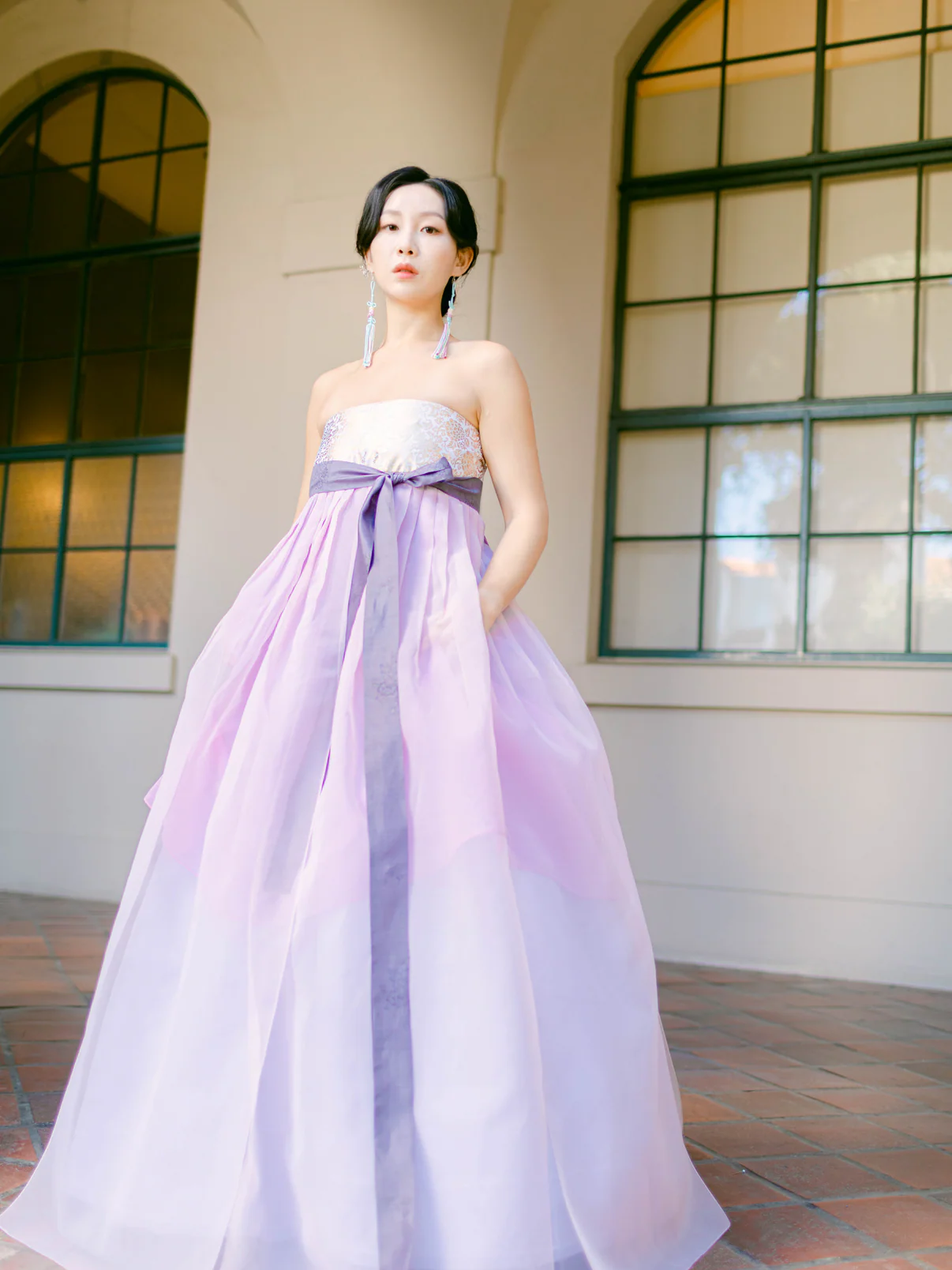
Modern hanbok from LeeHwa Wedding & Hanbok.
Reception Hanbok vs. Paebaek Hanbok
Many brides wear two dresses: one for the paebaek ceremony (often more traditional, with richer colors and embroidery) and a lighter fusion hanbok or Western dress for a reception outfit change. It's worth thinking through both early, since the aesthetics and budgets can differ significantly.
Online vs. Local Boutique
Buying Online
Many brides order hanbok online, especially for modern or fusion styles. Online shops often offer made-to-measure options and a wider selection. It's a good route if you don't have Korean bridal boutiques nearby.
Buying From a Boutique
Visiting a boutique lets you feel the fabrics, try different silhouettes, and work with someone who understands fit and ceremony context. This is especially valuable for paebaek hanbok, where the styling details and color choices carry more cultural weight.
Both are common, and it mostly comes down to how important the in-person experience is to you.
Custom vs. Off-the-Rack vs. Rental
Custom or Made-to-Measure
Made to your measurements, often with options to customize color, fabric, and embroidery. Best fit, longest lead time.
Off-the-Rack
Ready-made pieces that can be altered afterward. Faster and more affordable, with a smaller selection.
Rental
A practical choice for ceremonial or paebaek hanbok you'll wear for a few hours. Many boutiques in Korean communities offer rentals alongside purchases.
What to Look for in Quality
A few things worth checking when evaluating hanbok:
- Fabric: Silk and silk-blend hanbok have a richer drape and photograph beautifully. Polyester is more affordable and easier to care for, but can look flat in photos.
- Embroidery: Look for clean, dense stitching with defined motifs. Loose threads or uneven fills are signs of lower quality.
- Construction: Check that the jeogori (jacket) lining is fully finished and that seams are clean. A well-made hanbok holds its shape rather than collapsing or puckering.
- Online red flags: Heavily filtered product photos, no customer reviews, and no measurement guidance are all signs to be cautious.
Sizing and Fit
Hanbok fit differently than Western clothing. The chima (skirt) is typically high-waisted and forgiving, but the jeogori (jacket) is fitted and needs to be sized more carefully, especially across the shoulders and chest.
Even made-to-measure hanbok often need small adjustments. When ordering, provide detailed measurements and ask the vendor specifically about their sizing process. Plan to schedule alterations a few weeks before the wedding once your hanbok arrives.
How Much a Hanbok Costs
Prices vary depending on fabric, embroidery, and whether the piece is custom.
- Rental: $150–$400
- Ready-to-wear: $300–$800
- Custom / boutique: $800–$2,000+
- Korea-made custom: $500–$1,500+, plus international shipping
Ceremonial hanbok with heavy embroidery and silk fabric sit at the higher end. If you're wearing two looks (paebaek + reception), budget for both early.
Cultural Considerations
Color symbolism
Traditional paebaek hanbok often feature bold reds, blues, and greens, colors tied to specific meanings in Korean culture. Red and blue together are common for the bride and groom. Mothers of the couple traditionally wear specific colors too (often light blue and pink/purple for the groom's mother and the bride's mother respectively, but no set rule), so it's worth coordinating.
The paebaek ceremony
The paebaek is a post-ceremony ritual where the couple formally greets and bows to parents, who offer blessings in return. It's typically the most traditional moment of a Korean American wedding, and most couples wear hanbok specifically for it, even if the main ceremony is Western.
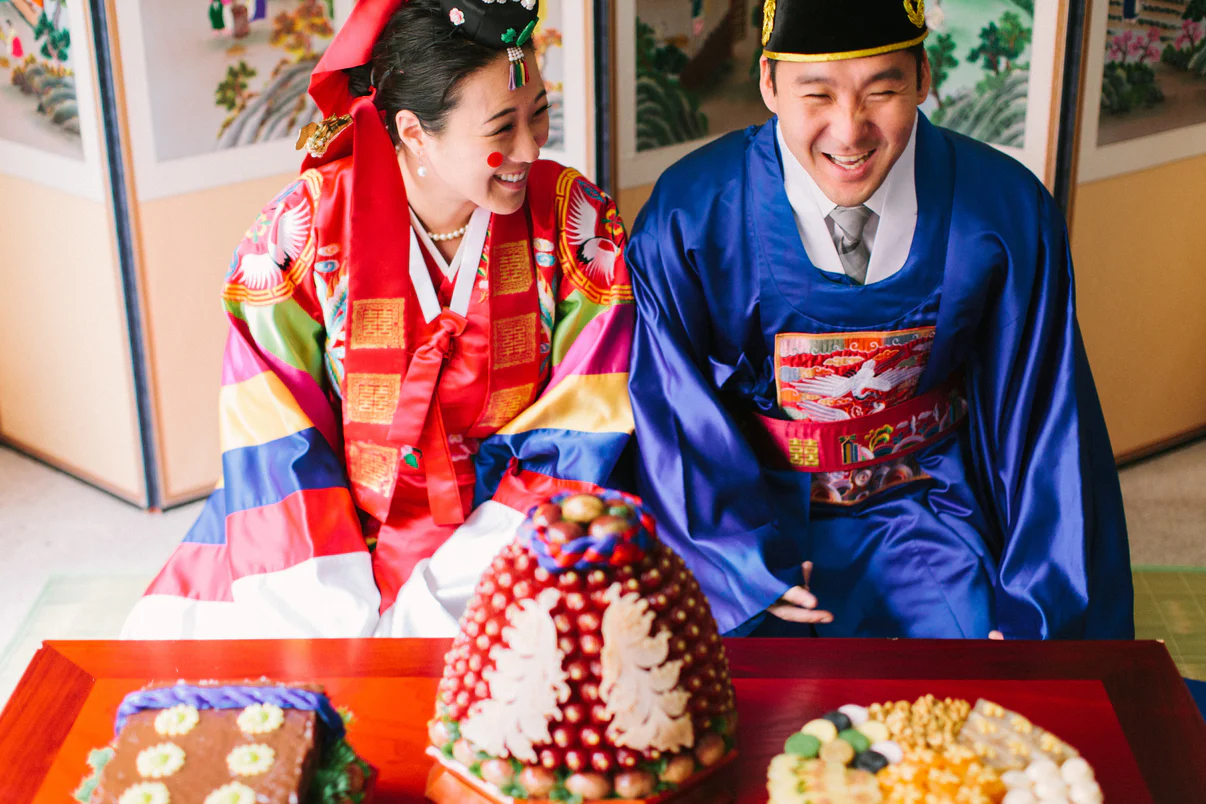
Paebaek ceremony with traditional hanbok from LeeHwa Wedding & Hanbok.
Non-Korean partners
More couples are choosing for both partners to wear hanbok for the paebaek, regardless of background. It's a beautiful gesture and increasingly common. Most boutiques are experienced with this and can help with fit and styling for both.
Where to Buy a Hanbok
Depending on where you live, you may find hanbok boutiques locally or order online. Brides often start in cities with strong Korean communities:
Local boutiques often offer rentals, fittings, and guidance on ceremony context, which is especially valuable for first-generation Korean American brides navigating family expectations.
Common Mistakes Brides Make
- Ordering too late, especially for custom or Korea-made pieces
- Forgetting to budget for a separate paebaek look
- Not asking about fabric before purchasing online
- Skipping alterations and accepting a poor fit
Quick Checklist
- Decide between ceremonial, modern, or fusion hanbok
- Determine if you need both a paebaek and a reception look
- Choose online or boutique based on your location and preferences
- Order 4–6 months in advance (more for custom Korea orders)
- Plan time for alterations
- Coordinate colors with family members if needed
With some early planning, shopping for your hanbok can be one of the most meaningful parts of the process.