How to Buy a Chinese Wedding Dress: A Complete Guide for Brides
Need help finding cultural vendors for your wedding? Check out our curated vendor directory.
For many Chinese American brides, choosing a Chinese wedding dress is one of the most meaningful parts of the celebration. Whether it's for a tea ceremony, banquet entrance, or outfit change during the reception, the dress often blends tradition with modern style.
If you're starting the search, the process can feel surprisingly unclear: Should you buy online or visit a boutique? What's the difference between a qipao and a qun kwa (qun gua)? And how far in advance should you order?
Here's a straightforward guide to help you navigate the process.
Start With Your Timeline
Chinese wedding dresses often require more lead time than people expect, especially if you want a custom piece.
A good rule of thumb is to start looking 4–6 months before the wedding. Custom dresses may take several weeks to produce, and you'll likely want time for alterations once the dress arrives.
If you're ordering from overseas or from an online brand, add extra time for shipping and potential adjustments. If your timeline is tight, many boutiques and online retailers offer ready-to-wear options that can be altered locally.
Decide Which Type of Chinese Wedding Dress You Want
Not all Chinese wedding dresses are the same. The most common styles you'll see are:
Qipao / Cheongsam
A fitted dress with a high collar and side slits. Modern versions are often worn for tea ceremonies or as a reception outfit change.
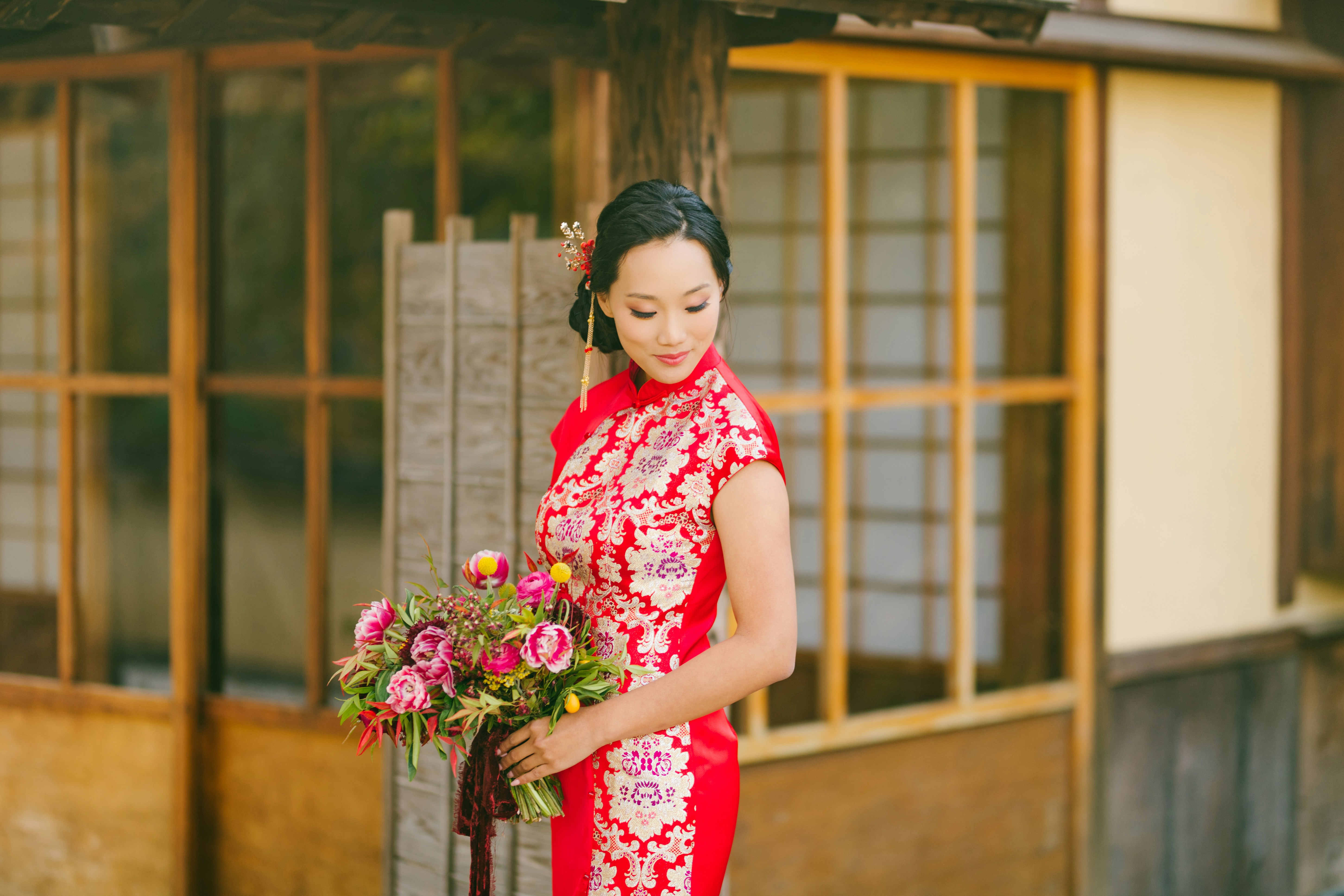
Qipao from East Meets Dress.
Qun Kwa
A two-piece embroidered jacket and skirt traditionally worn in southern Chinese weddings. These are often heavily embroidered with gold thread and symbolic motifs.
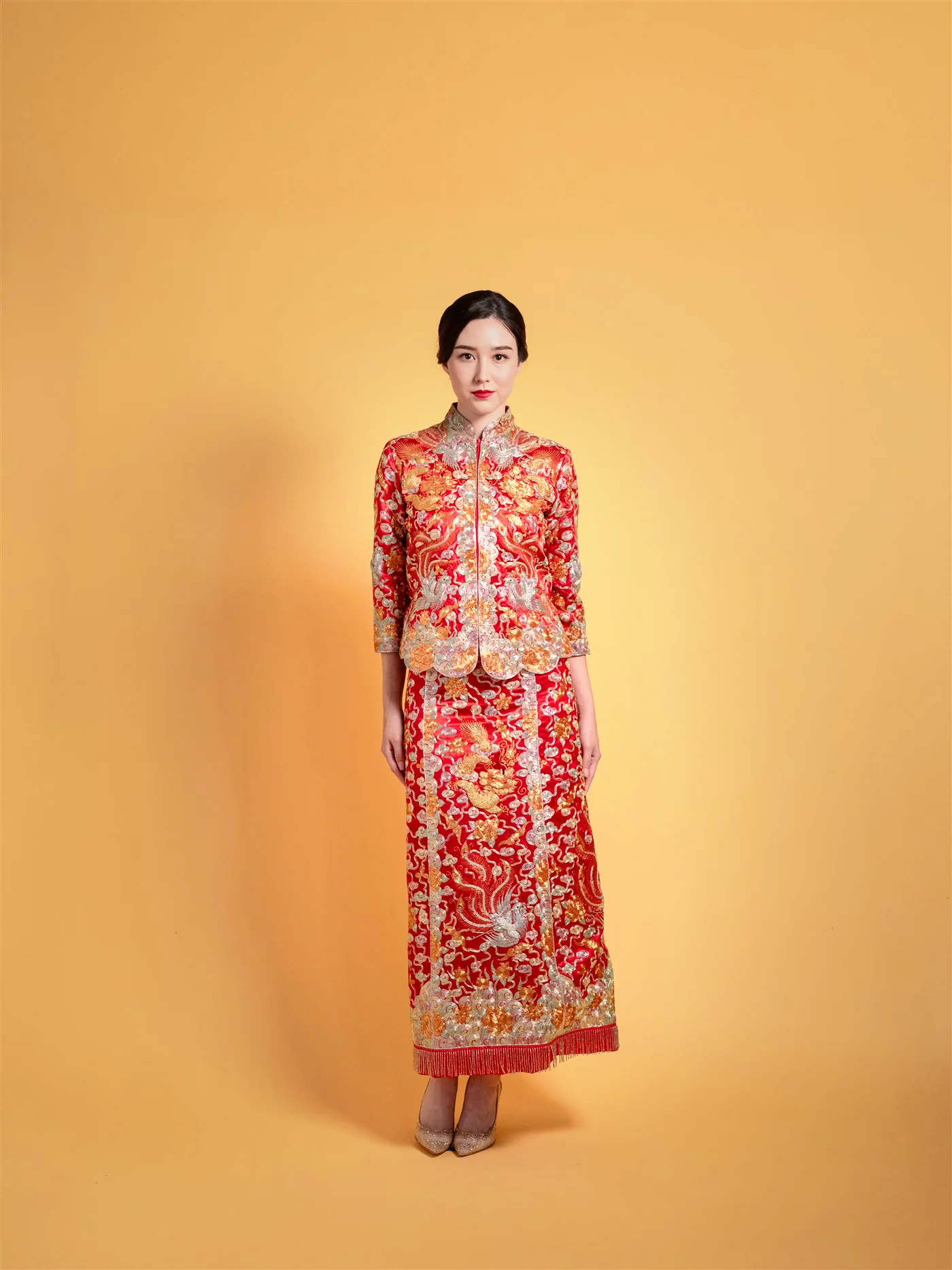
Qun Kwa from JINZA Oriental Couture.
Modern Chinese Wedding Dresses
Some brides choose contemporary interpretations that combine traditional silhouettes with lighter fabrics or modern cuts.
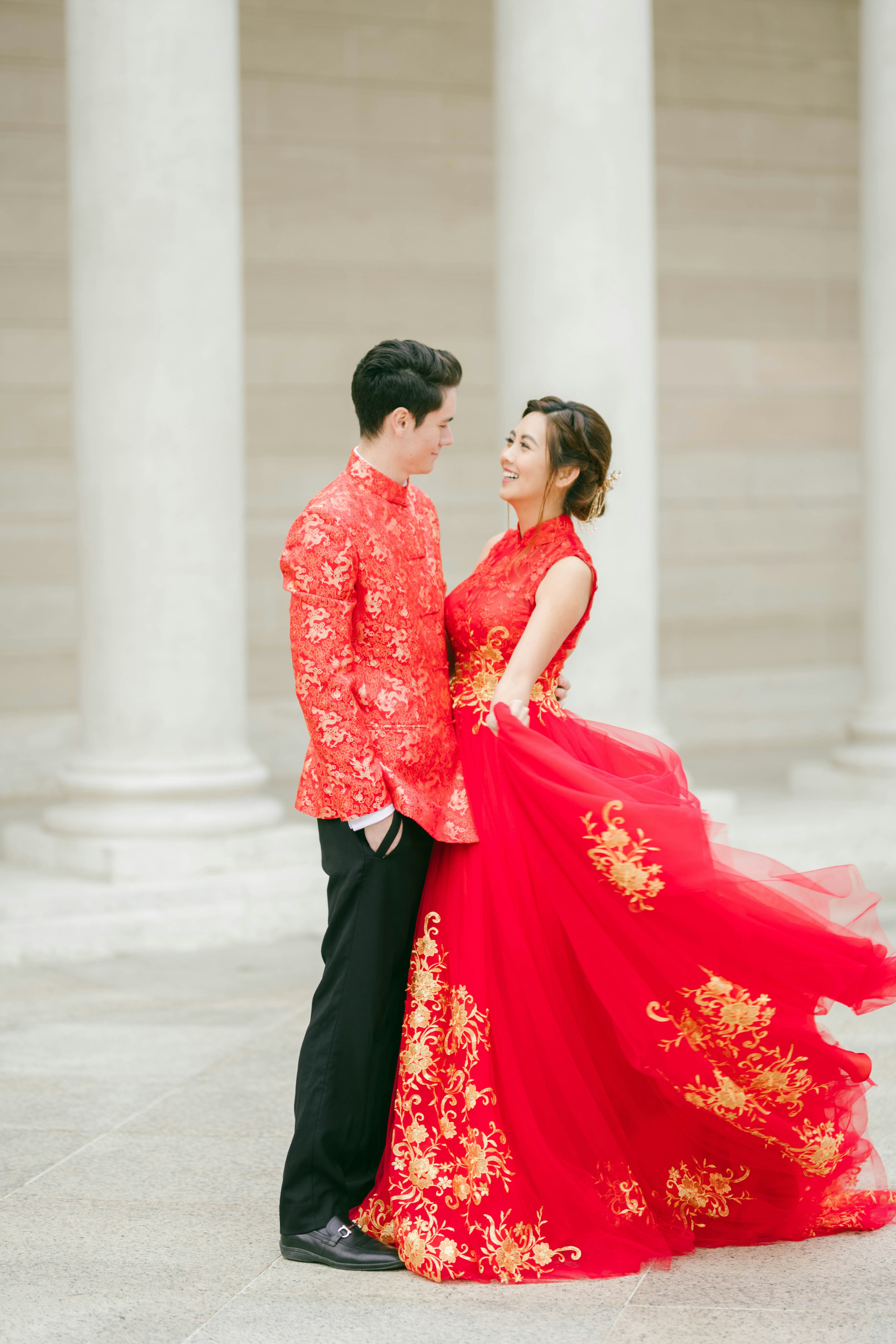
Modern dress from East Meets Dress.
Many brides wear two outfits: a Chinese dress for the tea ceremony and a Western wedding gown for the ceremony or reception.
Online vs Local Boutique
One of the biggest decisions is whether to buy your dress online or through a boutique.
Buying Online
Many brides order dresses online, especially if they already know the style they want. Online shops typically offer made-to-measure options and a wide selection of designs. This route is often more affordable and convenient if you don't have many Chinese bridal boutiques nearby.
Buying From a Boutique
Visiting a boutique allows you to try on different silhouettes, feel the fabrics, and work with someone experienced in Chinese wedding attire. You'll usually get better support for fittings and alterations, which can be helpful since qipaos are meant to fit very precisely.
Both options are common. It mostly comes down to how important the in-person experience is to you.
Custom vs Off-the-Rack
Chinese wedding dresses generally fall into three categories:
Custom or Made-to-Measure
These dresses are made based on your measurements and sometimes allow you to customize details like embroidery, color, or fabric.
Off-the-Rack
Ready-made dresses that can be purchased immediately and altered afterward.
Rental
Some boutiques offer dress rentals, especially for kwa sets. This can be a practical option if you'll only wear the outfit for the tea ceremony.
Custom dresses offer the best fit, but off-the-rack options are often faster and more affordable.
How Much a Chinese Wedding Dress Costs
Prices vary widely depending on the fabric, embroidery, and whether the dress is custom:
- Online qipao: $150–$500 for ready-to-wear or basic made-to-measure
- Qun kwa: $800–$2,500+ to purchase; embroidery and construction make these pricier than qipaos
- Boutique dresses: $500–$1,500 for off-the-rack or semi-custom pieces
- Custom designer pieces: $1,500–$5,000+ depending on fabric, embroidery, and designer
- Rentals: $200–$600, with kwa sets typically at the higher end
Intricate embroidery, silk fabrics, and custom tailoring can all increase the price.
Choosing Colors and Fabrics
Red is the traditional color for Chinese weddings because it symbolizes luck and happiness. Many dresses feature gold embroidery with dragon and phoenix motifs, peonies, and other auspicious symbols.
That said, modern brides often choose softer shades such as champagne, blush, or deeper burgundy tones.
Fabric also affects how the dress feels and photographs. Silk and brocade tend to look the most traditional, while lighter fabrics can feel more comfortable for longer events.
Fit and Alterations
Fit is especially important with qipaos because the silhouette is designed to be close-fitting.
Even if you order a made-to-measure dress, it's common to do small adjustments with a local tailor. Typical alterations include adjusting the waist, length, or sleeve openings.
Plan to schedule alterations a few weeks before the wedding once your dress arrives.
Tea Ceremony vs Reception Dresses
Many Chinese weddings include a tea ceremony, where the bride wears a traditional outfit as she and the groom serve tea to family members.
Some brides choose a more traditional look (like a kwa) for the tea ceremony and a qipao or modern dress for the reception.
Others wear a single Chinese dress for the tea ceremony and change into their Western wedding gown afterward.
There's no single rule; the choice usually reflects family traditions and personal style.
Where to Buy a Chinese Wedding Dress
Depending on where you live, you may find Chinese bridal boutiques locally or choose to order online.
Many brides start by exploring vendors in larger cities with strong Asian wedding communities, such as:
Local boutiques often offer fittings, alterations, and advice on selecting the right style for your ceremony.
Common Mistakes Brides Make
A few things brides often wish they had known earlier:
- Ordering too late, leaving little time for alterations
- Not budgeting for tailoring, which is often necessary
- Choosing a silhouette without trying one on first
- Forgetting to plan a separate tea ceremony outfit
Starting early makes the process much easier.
Quick Checklist
If you're beginning your search, this simple checklist helps keep things on track:
- Decide which style you want (qipao, kwa, or modern dress)
- Choose whether to buy online or visit a boutique
- Order the dress several months before the wedding
- Plan time for alterations
- Decide if you want a separate tea ceremony outfit
With a little planning, finding the right Chinese wedding dress can be one of the most enjoyable parts of the process.